A calm first weekend starts with fewer expectations, more rest, and very clear routines.
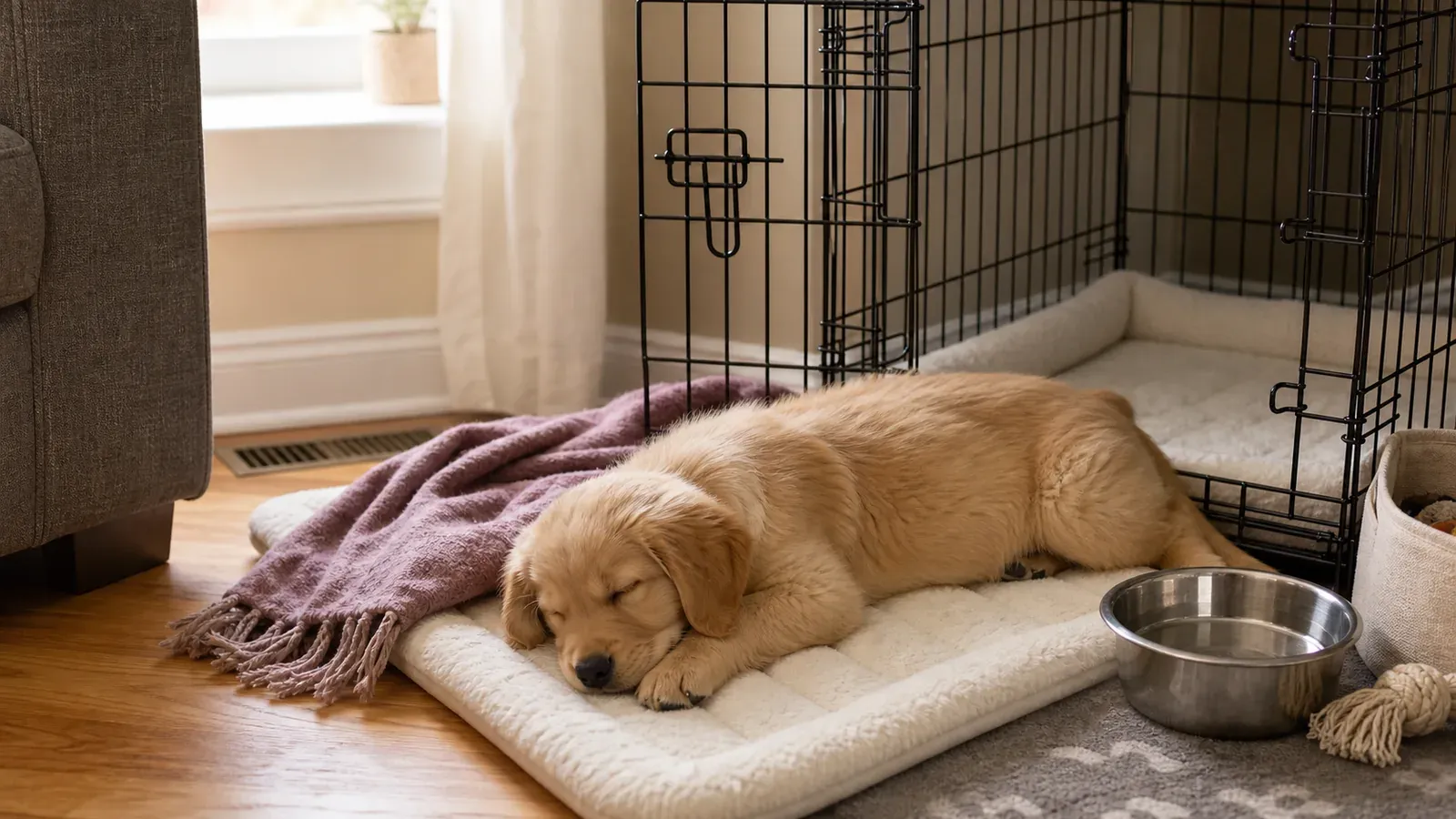
The first seventy-two hours are about predictability. We encourage families to keep visits light, protect naps, and focus on consistency over entertainment.
Your puppy is learning a brand-new house, new sounds, new smells, and new people all at once. A simple first weekend helps that transition feel safer and easier to understand.
Choose one sleeping area, one potty path, one feeding station, and one calm place where your puppy can decompress. The first few days are not the time to test every room, every toy, and every visitor.
Set up the crate or pen before you leave for pickup. Put towels, cleanup supplies, food, water, and chews where you can reach them quickly. When the house is prepared, the humans stay calmer too.
The first day should be gentle and repetitive. Offer a potty trip when you arrive, a small drink of water, a short explore, and then rest. Most puppies need a nap sooner than the family expects.
If your puppy cries in the crate or pen, keep your response calm and boring. You can reassure without turning the moment into a big event. The puppy is learning that quiet routines repeat and that rest is part of the household rhythm.
Once the puppy has slept, eaten, and pottied a few times successfully, you can add tiny moments of training. Reward eye contact, following you through the doorway, settling near your feet, and coming when invited.
Short, successful repetitions are better than long sessions. A puppy who can settle after play is learning something more useful than a puppy who is entertained until they are exhausted.
Mouthiness, frantic zooming, sudden accidents, or refusing food can be signs that the day has been too full. The answer is usually fewer visitors, fewer rooms, and more protected sleep.
The goal is not to have everything perfect by Monday morning. The goal is to help your puppy understand that the new home has a rhythm: eat, potty, play, rest, repeat.
